Paleo Paw
My Fossil Collection
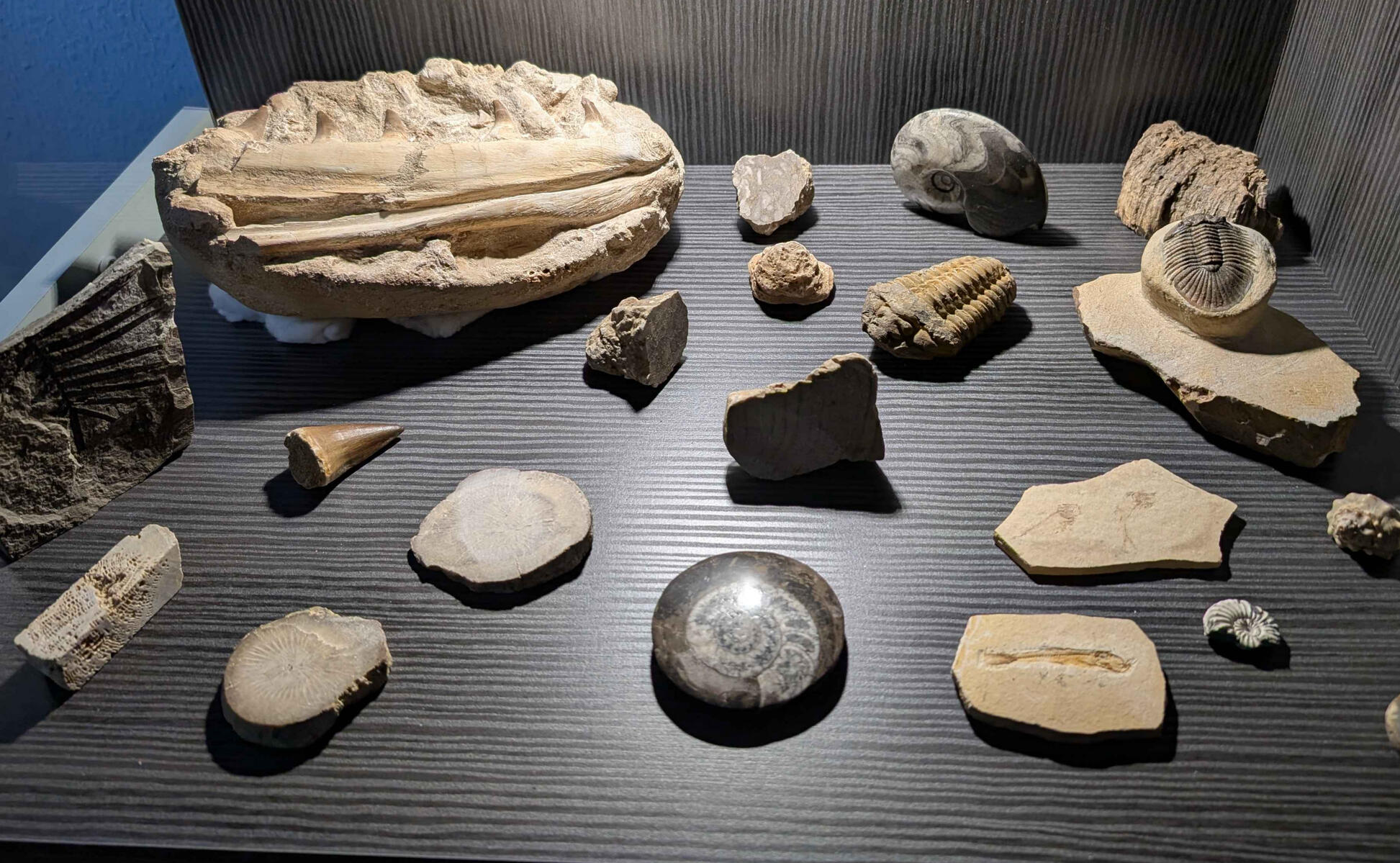
As a little extra I want to show off my little fossil collection that I treasure and tell you some facts about the prehistoric animals that fossilized. I am still searching for more fossils to add to my little collection of whimsy and friends from a long past time.
Mosasaurus
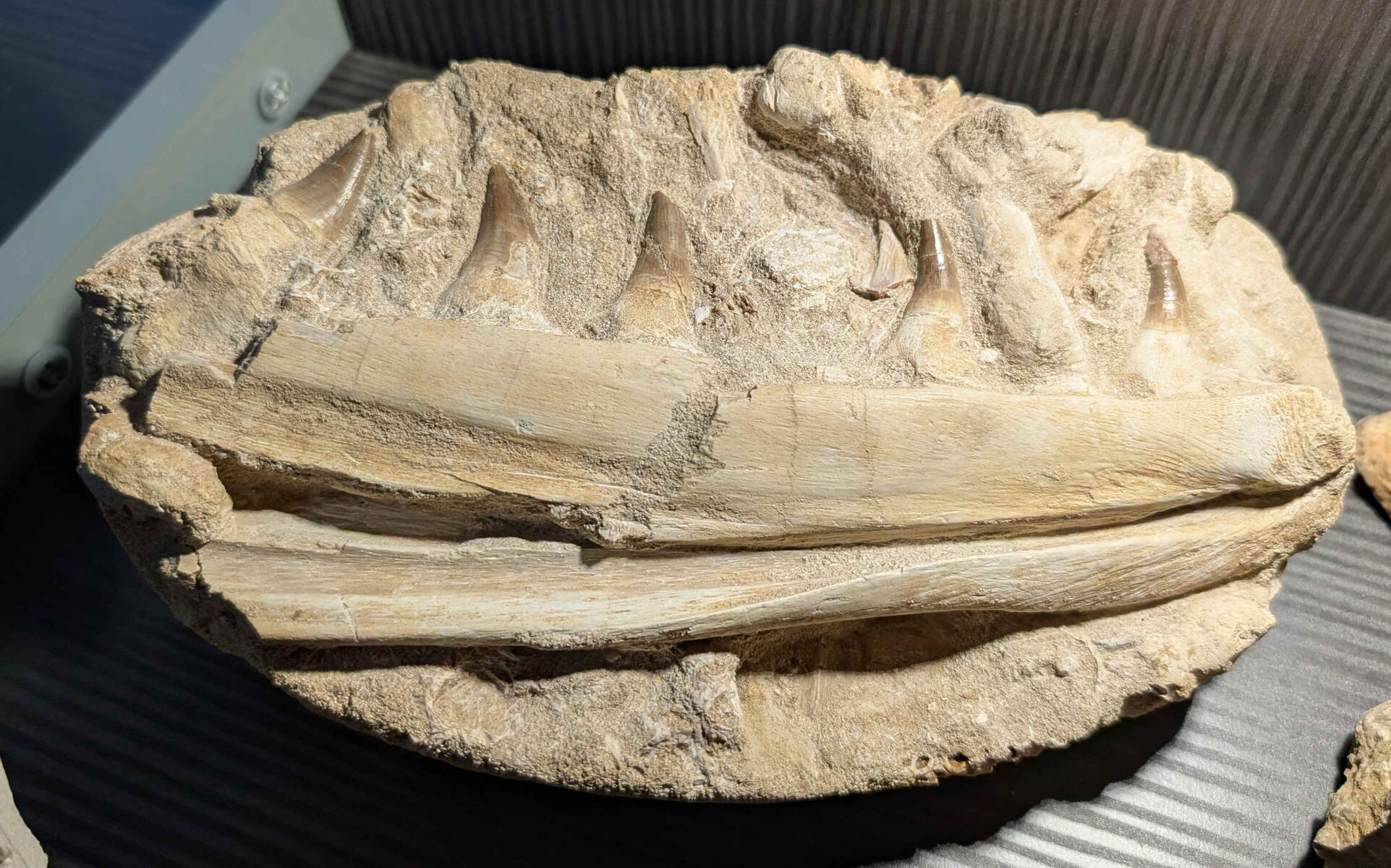
Mosasaurus (Lower Jaw)
This is the lower jaw of a juvenile Mosasaurus. The jaw bone is 21 cm long and the biggest tooth is 3 cm big. This is my most prized posession. I love this jaw so much! It was found in the netherlands and is around 65 million years old.The Mosasaurus “Lizard of the Meuse River” is named after the river near Maastricht, Netherlands, where its fossils were first found in the late 18th century. It was a marine reptile not a dinosaur, but a distant relative of monitor lizards and snakes. They lived in the late cretaceous about 82–65 million years ago. The largest species, Mosasaurus hoffmannii, could grow up to 14–18 meters long. It was the apex predator of the oceans, similar to how orcas and great white sharks are today.I got this fossil from my dad when I was 10 year old and he went to a junk market in the netherlands. One of my first and still greatest fossil in my collection!
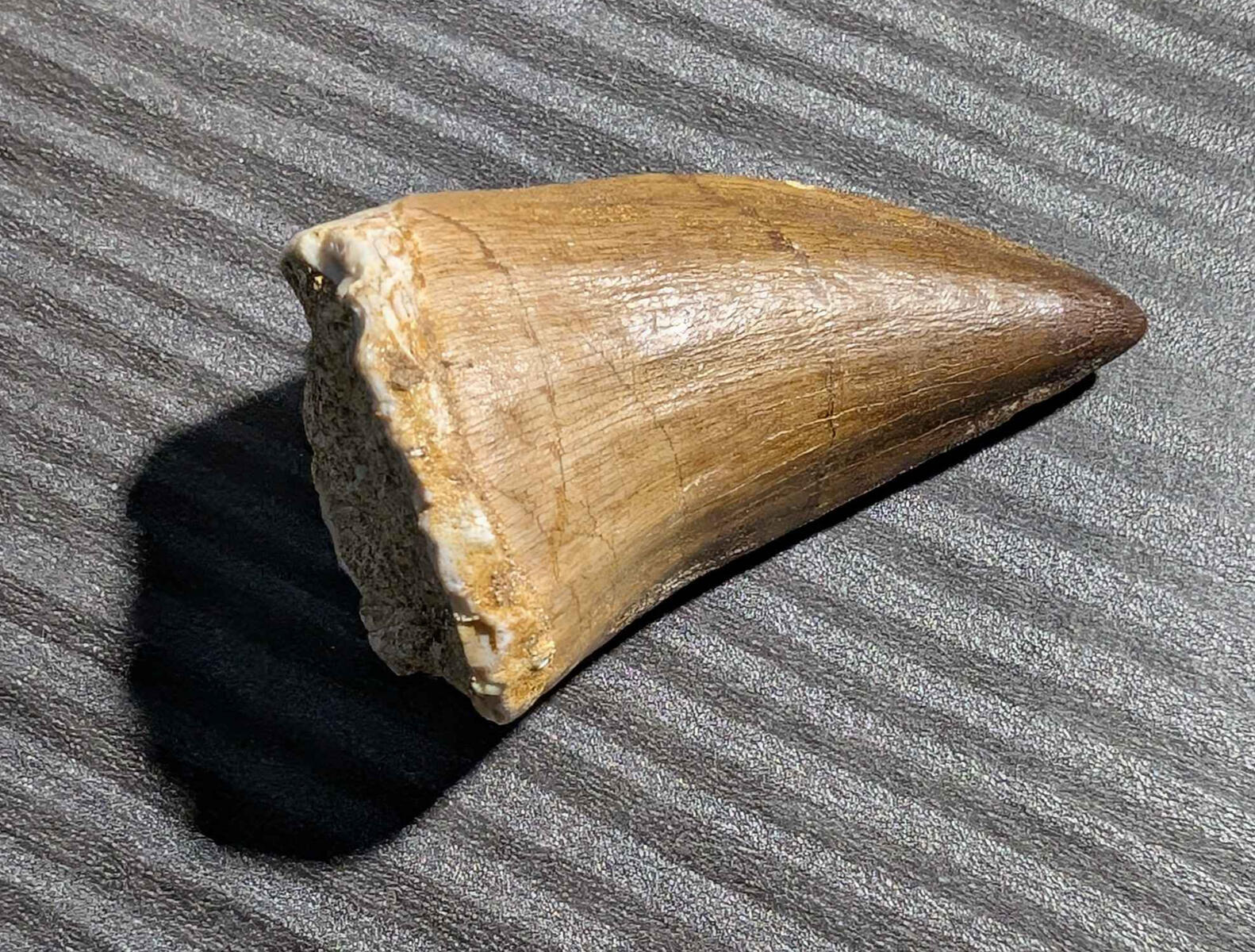
Mosasaurus (Tooth)
This is the tooth of an adult Mosasaurus. The tooth is 4 cm long and at the bottom 3 cm thick. It was probably one of the smaller and thicker molar teeth of the animal and not a tooth to catch and tear its prey apart. You can see some little wear scars of the tooth in the fossil from perhaps chewing, crushing and breaking up bones and meat of its prey.I got this fossil from a gem stone and fossil shop in Monschau Germany.
Trilobites
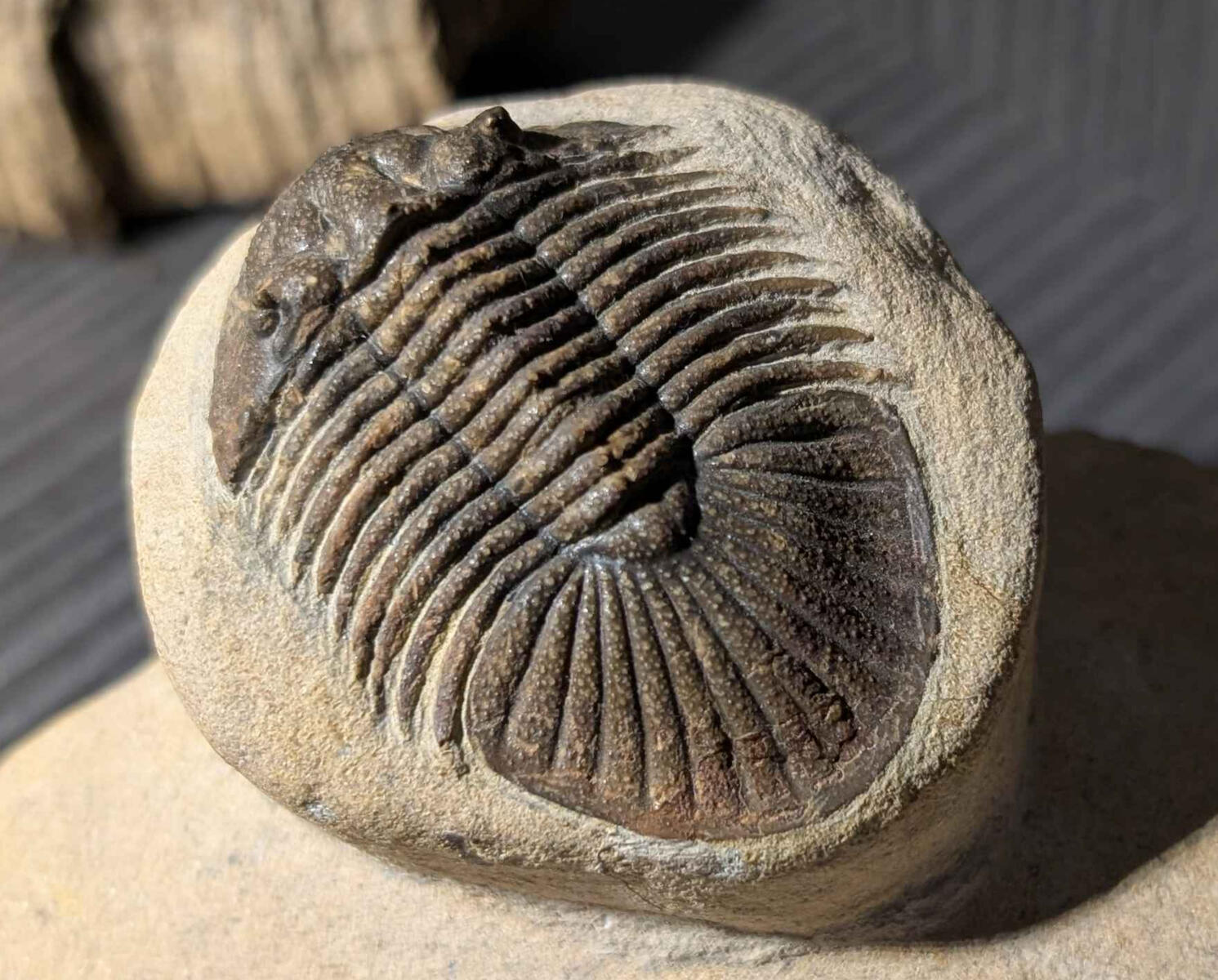
Trilobite Scutellum
This is the fossil of a small Trilobite Scutellum (more specific "meta scutellum pustulatum"). The little guy is 5 cm long and 3,5 cm wide. This little Trilobite is my best and most detailed fossilized friend. It was found in Morocco and is around 315 million years old.The Scutellum, latin for “little shield,” referring to its broad, shield-like shape, is one of the 15 thousand species of Trilobite. They were marine arthropods, related to modern horseshoe crabs and insects. Trilobite lived in the Cambrian till the Permian about 521-251 million years ago. Scutellum fossils are often beautifully preserved and are popular among collectors, especially from Moroccan fossil beds. Its flat body and broad pygidium (shield) suggest it was good at burrowing or hiding in the ocean floor, possibly a defense against predators like early fish.I bought this fossil from the gem stone collection shop "Bernd Eckel - Meilen Stein" in Aachen Germany.
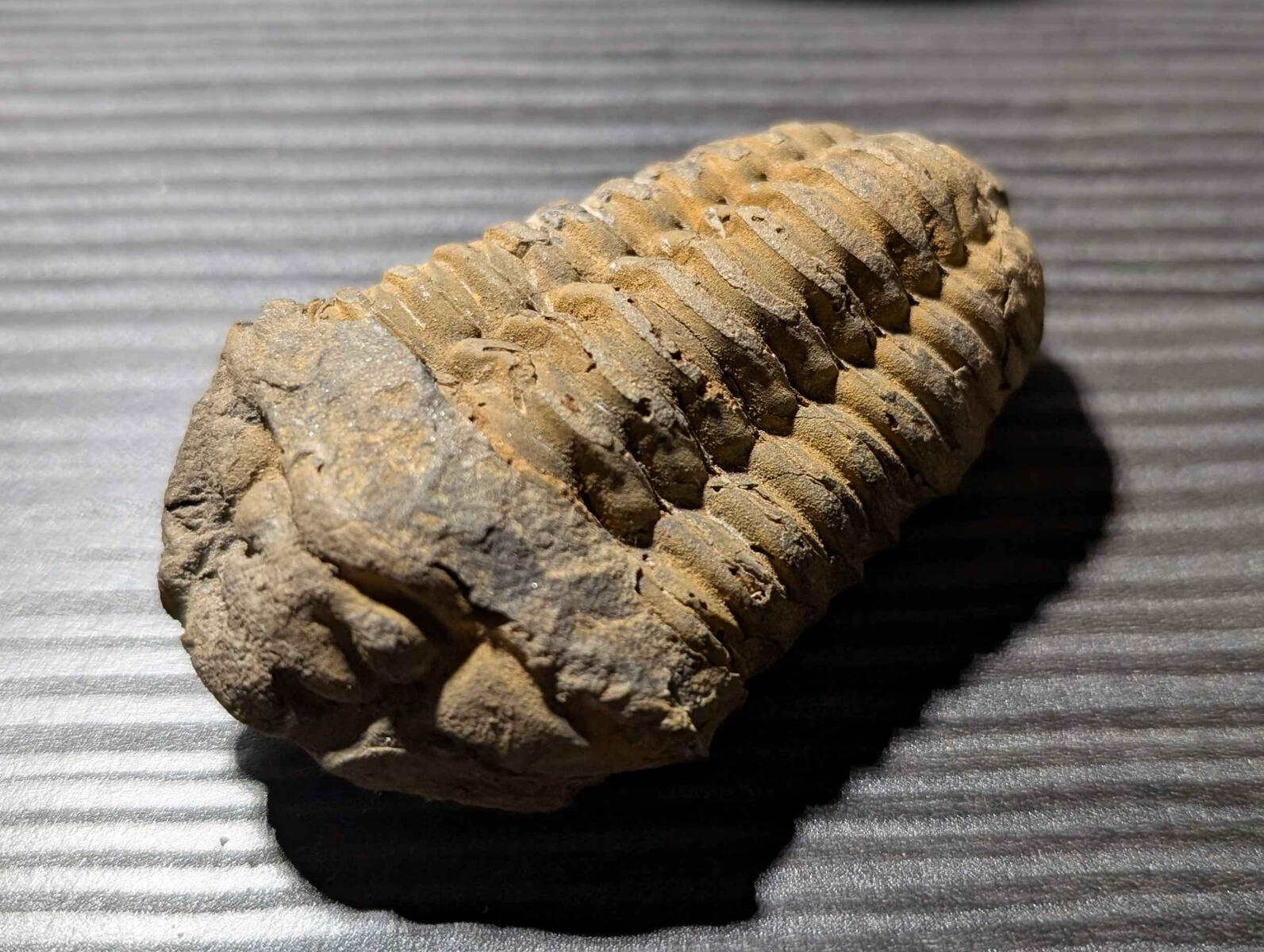
Trilobite Calymenina
This fossil of a Trilobite Calymenina is the oldest fossil I posess. It is 8 cm long and 5 cm wide. It was found in Trier Germany and is probably around 420 million years old.The Calymenina is another sub species from the Trilobites and it lived around the Ordovician through the Devonian, about 485–359 million years ago. Typically had 13 body segments, which made them quite flexible. Many Calymenina were deposit feeders, so they ate organic matter from the sediment. Some might have been scavengers.I got this little guy as a gift from a museum owner in Trier Germany, as I was on a field trip to search and dig up my own fossils. Little Han was a bit sad that she got only prehistoric fossilized corals and no trilobites.
Prehistoric Fish
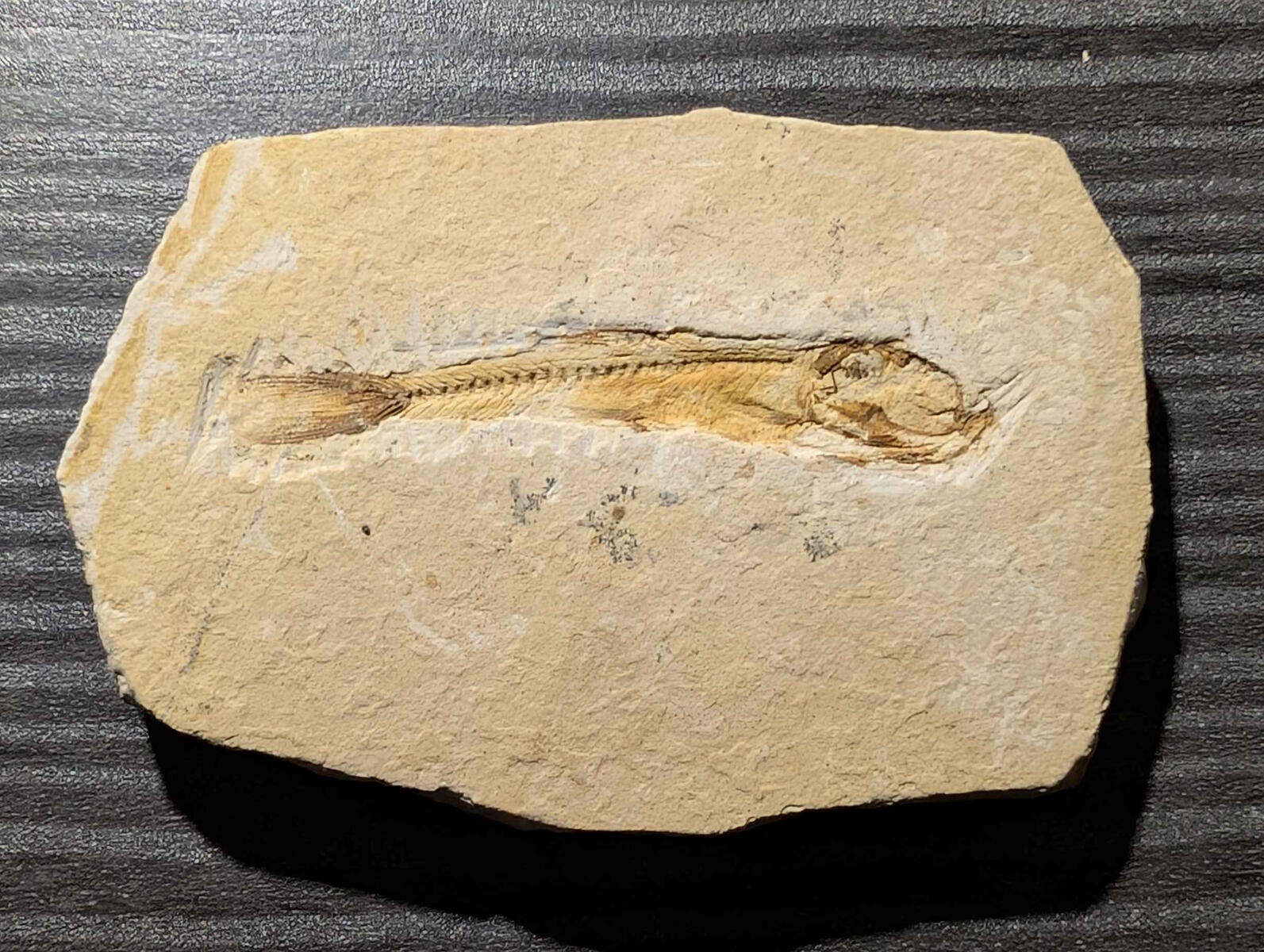
Leptolepides Sprattiformis
I am not too sure this fossil actually depicts "Leptolepides Sprattiformis" but given the place it was found it makes the most sense. This prehistoric fish is 4,5 cm long and probably 150 million years old.Leptolepides Sprattiformis (latin for "Slender-scaled fish shaped like a sprat") is especially well known from the famous Solnhofen Limestone in Germany, the same deposits where Archaeopteryx was found. It lived in the late Jurassic about 150 million years ago. Leptolepides Sprattiformis is often cited as one of the first “modern” fish, bridging the gap between older ray-finned fishes and today’s teleosts, which make up about 96% of living fish species. They probably swam in schools, similar to modern small fish like anchovies or sardines.I bought this fossil from the gem stone collection shop "Bernd Eckel - Meilen Stein" in Aachen Germany.
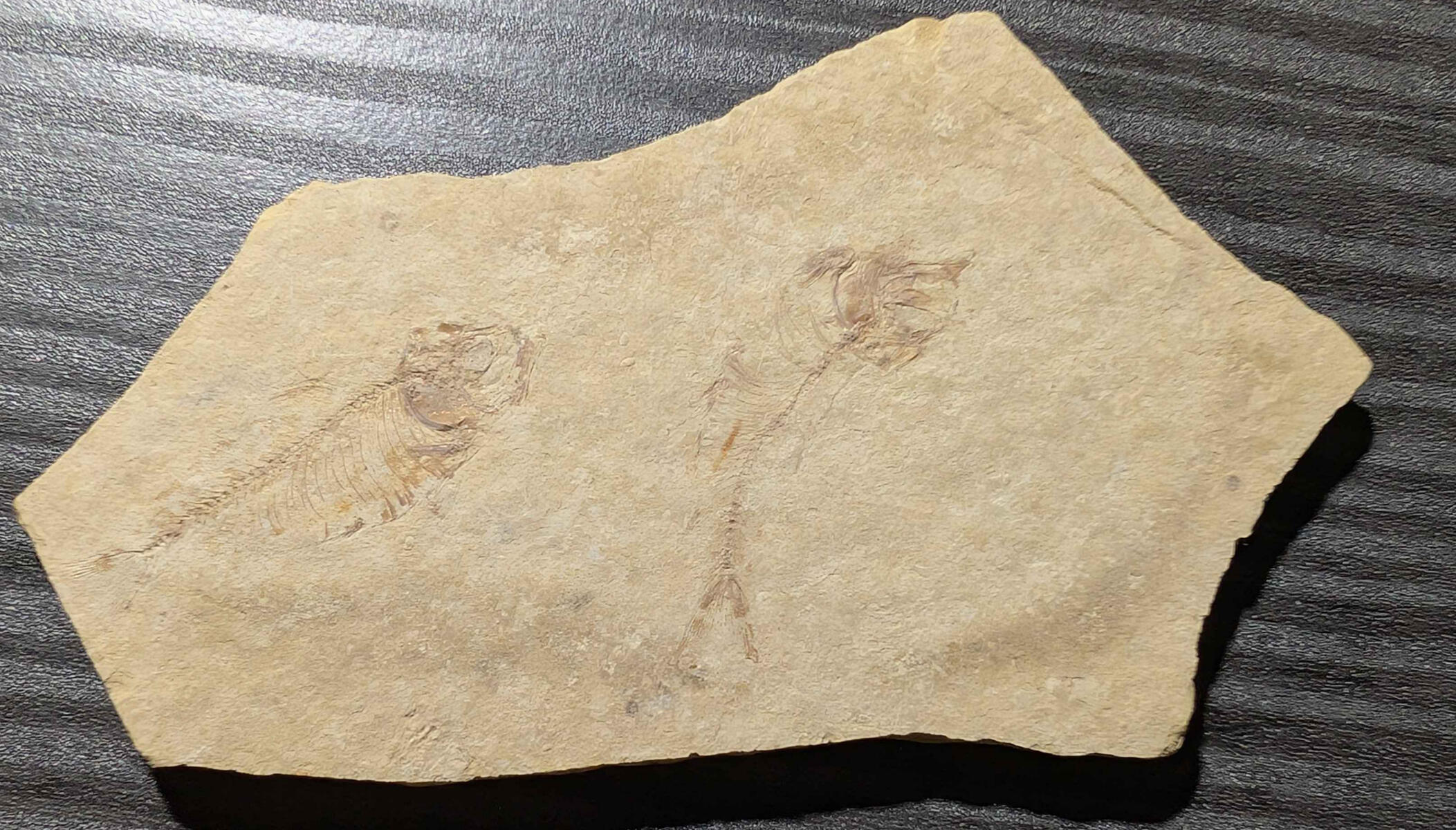
2 Unknown Fish
I couldn't find out so far how old and who those two guys are...I got this fossil from a gem stone and fossil shop in Monschau Germany. This fossil is from a Museum collection that closed.
Ammonites
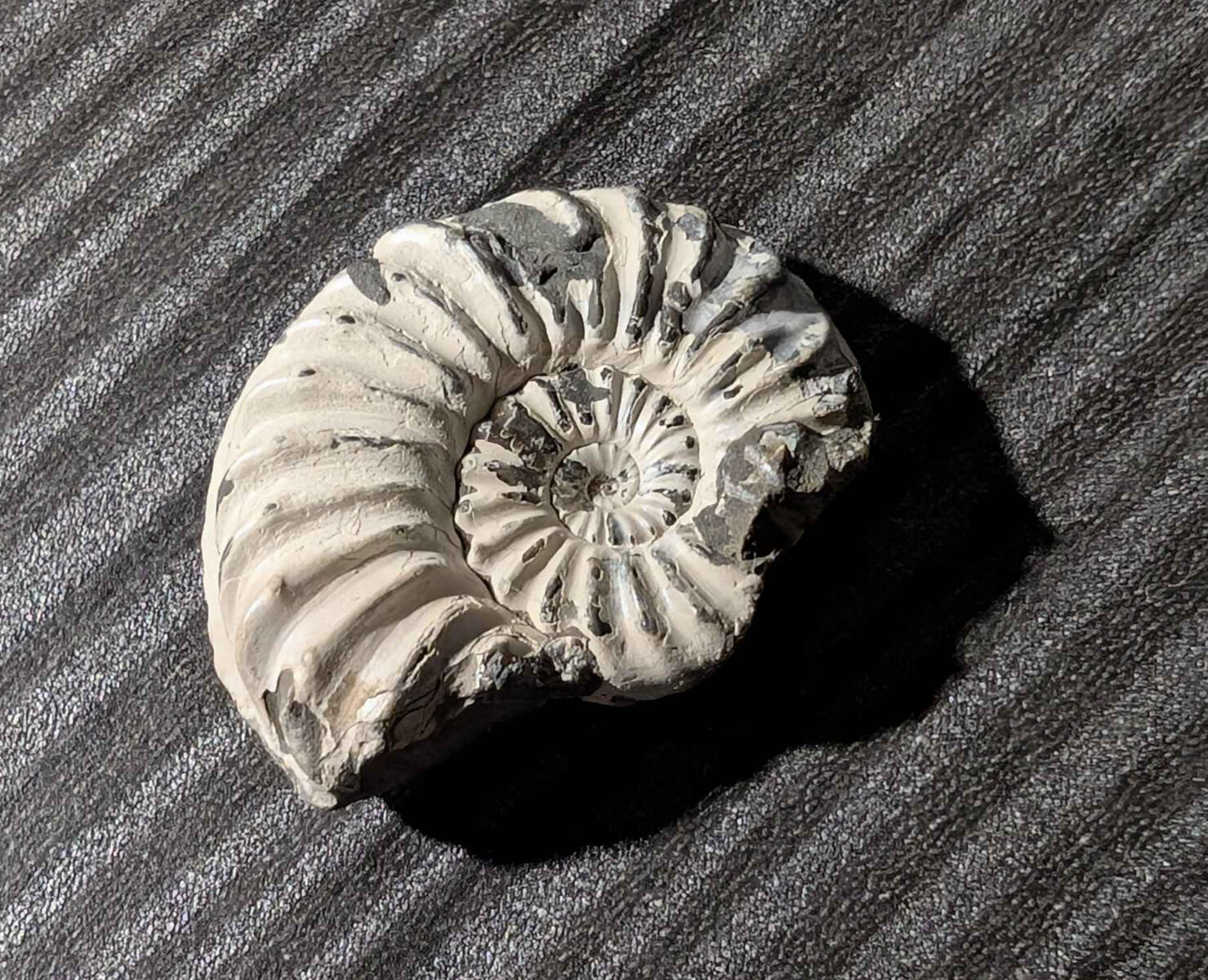
Pleuroceras Transiens
This little fossil shell is from a Pleuroceras Transiens which is only 2 cm small and around 180 million years old. It was found in Trier Germany.Pleuroceras Transiens from greek and latin meaning "side horn passing through". It was one of the species of Ammonite that was a marine mollusk, that is related to today's squid, cuttlefish, and octopuses. They lived in the early jurassic, specifically the lower toarcian stage around 183-180 million years ago. The fossils are especially known from Germany, France, and England, often in marine sediments formed in shallow seas. Because ammonites evolved quickly and had wide geographic ranges, geologists use species like this one to precisely date Jurassic rock layers.I bought this fossil from the gem stone collection shop "Bernd Eckel - Meilen Stein" in Aachen Germany.
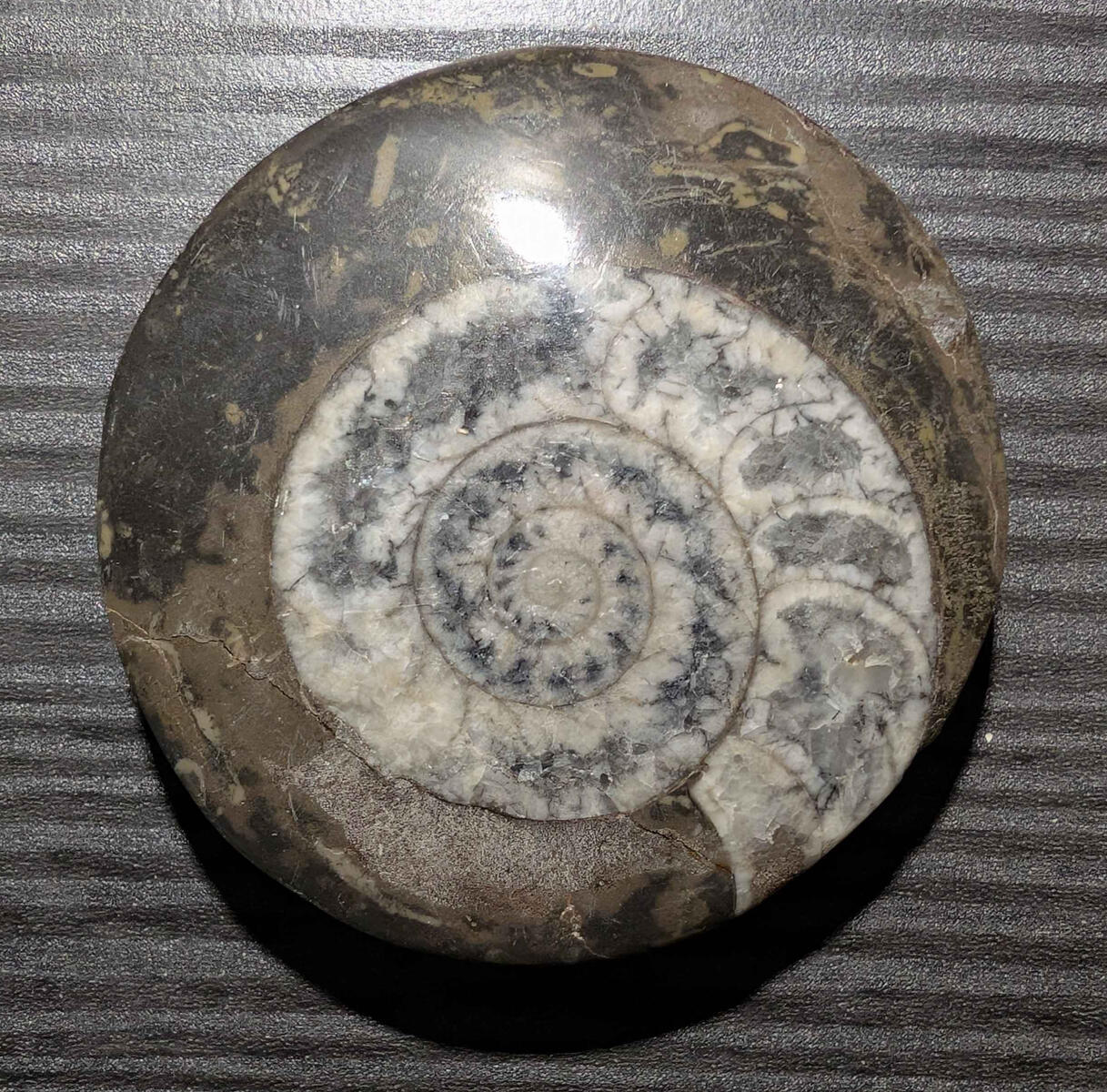
Goniatite
This little fossil shell is from a Goniatite pressed into a round rock in time which is 6,5 cm big and around 380 million years old.Goniatite (greek for "angular rock/stone") was living during the devonian period around 390-360 million years ago. They represent an early stage in ammonoid evolution, long before the more famous Jurassic ammonites like Pleuroceras. They likely fed on plankton, small crustaceans, and larvae, using their tentacles.My mum gifted it to me from her collection.
Prehistoric Plants and Corals
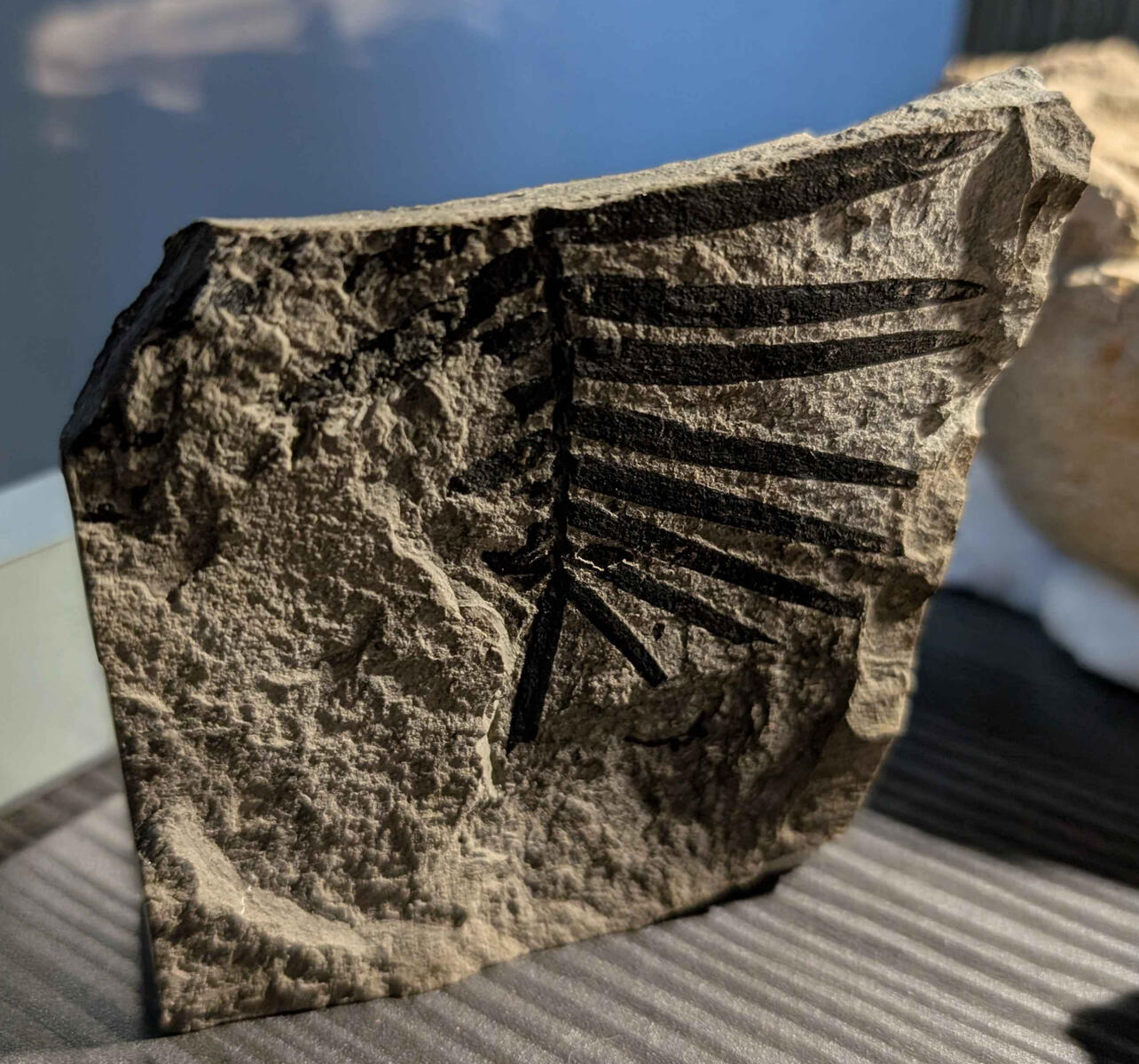
Pterophyllum
This leaf is part of the prehistoric seed plant Pterophyllum. The fossil, which is 8 cm big, is around 200 million years old. It was found in Maastricht Netherlands.Goniatites comes from Greek meaning "feather leaf". It likely grew as part of small trees or shrubs, similar to living cycads. They mainly grew during the triassic to jurassic about 250-145 million years ago. They were common plants in Mesozoic forests, forming part of the diet for many herbivorous dinosaurs. The fossil leaves of Pterophyllum are often beautifully preserved and help paleobotanists reconstructing the Mesozoic landscapes. The fossils are found in Europe, Asia, and North America.I got this fossil from a gem stone and fossil shop in Monschau Germany. This fossil is from a Museum collection that closed.
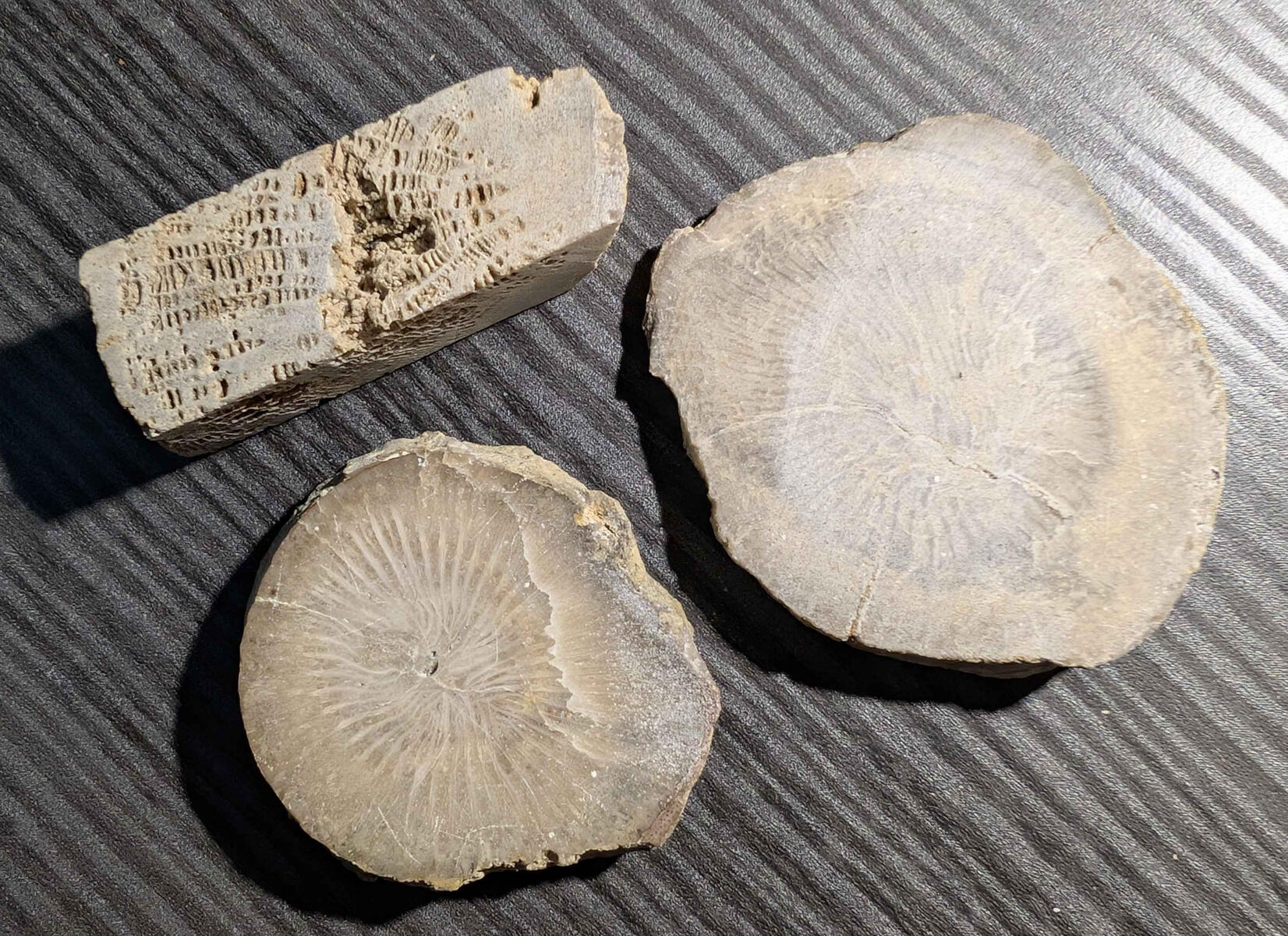
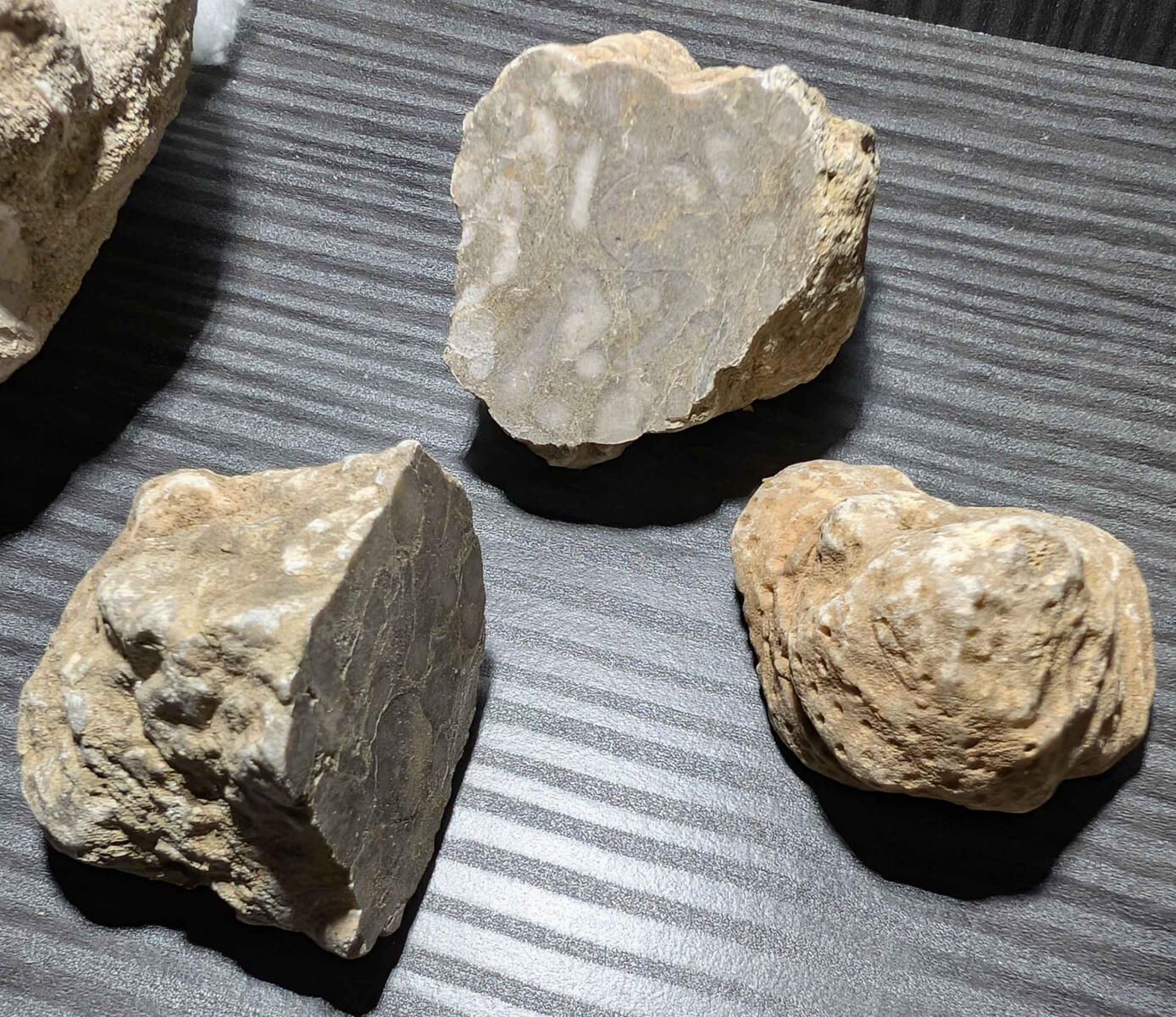
Unidentified Fossils
Those are some fossilized corals, sea sponges and possibly wood that I found in Trier while I was part of a fossil digging tour as a child.
And that's it so far... I hope I can expand my collection in the future with more exciting reminiscences of a long past time and world.Thanks for looking at my treasured old friends.